 By Muhammad Ali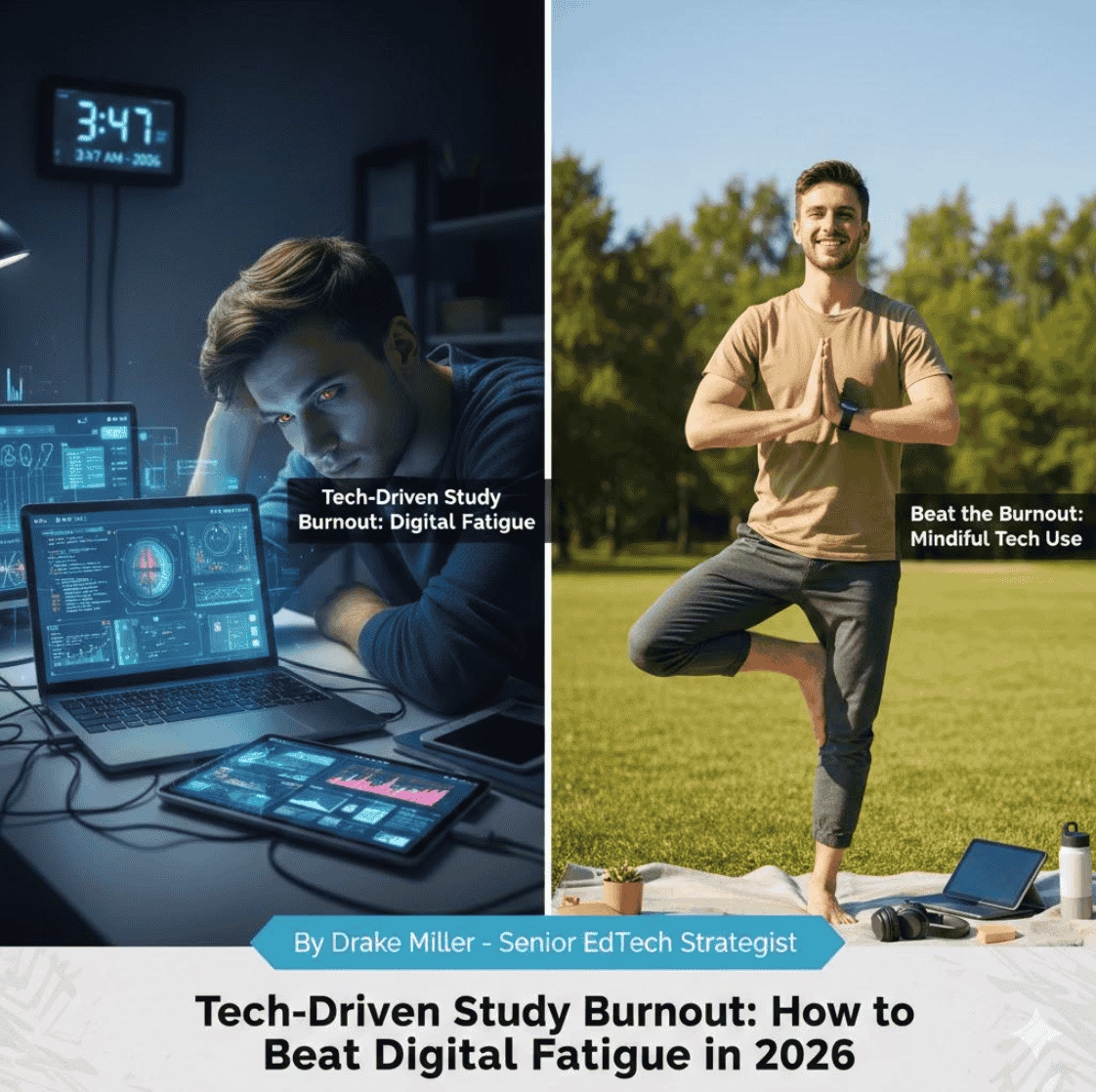
Introduction: The Digital Shift and a New Kind of Exhaustion
In the modern educational landscape, the image of a student hunched over a heavy textbook by candlelight is a relic of the past. Today, that student is more likely illuminated by the high-intensity blue light of a dual-monitor setup, toggling between sixteen open tabs, a digital textbook, a collaborative Zoom session, and a constant stream of Discord notifications.
While technology has democratized information and made global resources available at the click of a button, it has introduced a modern silent epidemic: Tech-Driven Study Burnout. As we lean further into digital-first education in 2026, we must ask ourselves—is the very technology designed to help students actually pushing them to a cognitive breaking point? This isn’t just about hard work; it is about the structural way digital tools interact with the human brain.
The “Always-On” Crisis: LMS Hyper-vigilance
For university students, the “always-on” nature of digital learning has dissolved the boundary between school and home. Before the digital shift, leaving the classroom meant a physical and mental break. Today, the classroom lives in the student’s pocket.
With Learning Management Systems (LMS) like Canvas and Blackboard, “reminders” ping through smartphones during dinner or late at night. This creates LMS Hyper-vigilance, where students feel they can never truly “switch off.” When the pressure of high-stakes projects becomes too much, many students seek dissertation writing services to manage the heavy technical requirements of their final year without succumbing to chronic stress.
The Cognitive Load: Multitasking vs. Deep Learning
One of the biggest myths of the digital age is that the younger generation is “great at multitasking.” In reality, the human brain isn’t wired to multitask; it rapidly switches tasks, which incurs a “switching cost.” Every time a student moves from a research paper to a WhatsApp notification, their brain loses precious focus.
When a student uses a laptop to study, they are battling an algorithmic war for their attention. This fragmented focus—known as Cognitive Overload—means it takes significantly longer to process complex information. What should have been a two-hour study session turns into a four-hour marathon of distracted scrolling. This inefficiency leads to a sense of “running in place,” where students feel exhausted despite not having achieved their academic goals—a hallmark of burnout.
Comparative Analysis: Digital Burnout vs. Mindful Learning
| Feature | Digital Burnout Trait | Mindful Learning Trait |
| Information Intake | High-velocity / Unfiltered | Curated / Focused |
| Focus Style | Task-Switching (Multitasking) | Monotasking (Deep Work) |
| Connectivity | 24/7 “Ping” Culture | Defined “Digital Sunset” |
| Physicality | Sedentary / High Blue Light | Tactile / Analog Breaks |
| Recovery | Screen-based “Relaxation” | Neural Decompression (Offline) |
| Support System | Isolated Struggling | Strategic Academic Assistance |
The AI-Academic Paradox: Help or Hindrance?
In 2026, the integration of Generative AI has added a new layer to the student experience: Prompt Fatigue. Students often spend hours “fighting” with AI tools for the correct output, adding technical frustration to a heavy workload.
Furthermore, over-reliance on AI can lead to “metacognitive laziness.” When a student stops engaging in the “struggle” of learning, they lose the dopamine hit of a “breakthrough.” For instance, a student struggling to find a unique angle for a thesis might find it more rewarding to browse a list of specialized history dissertation topics to spark their own original critical thinking rather than letting a bot automate the process
The Physiological Toll: Sleep and “Computer Vision”
Tech-driven burnout isn’t just mental; it is deeply physiological. Computer Vision Syndrome, characterized by headaches, blurred vision, and neck pain, is now a leading complaint among high schoolers and college students.
Furthermore, the blue light emitted by screens suppresses melatonin production. According to the Centers for Disease Control, 4 in 10 high school students now feel persistently hopeless, a trend heavily linked to the lack of quality sleep caused by late-night digital study sessions. When a student is physically drained, their resilience to academic stress plummets.
Expert Strategies to Combat Burnout
If you find yourself staring at your screen with a sense of dread, it’s time to recalibrate your relationship with digital learning. Here are four science-backed ways to reclaim your mental space:
- Implement a “Digital Sunset”: Set a firm cutoff time for schoolwork. At least 60 minutes before bed, power down all academic devices. This allows your nervous system to exit “academic mode” and significantly improves the quality of REM sleep.
- The Monotasking Method: Use browser extensions that block distracting sites. Focus on one task for 25 minutes (the Pomodoro Technique), then take a 5-minute break away from a screen.
- Seek Strategic Academic Support: Sometimes, the sheer volume of work is simply too high to handle alone. Recognizing when you are overwhelmed is a sign of high-level time management, not weakness. Whether it’s a difficult essay or a complex coding project, seeking professional guidance can alleviate the pressure. If you find yourself drowning in deadlines, Myassignmenthelp.com provides the structural support and tutoring needed to get back on track without sacrificing your mental health.
- Analog Recovery: For every hour spent on a screen, spend 15 minutes doing something tactile. Drawing, walking, or reading a physical book helps reset your nervous system and prevents the “brain fog” associated with digital fatigue.
The Role of Educators and Parents
The responsibility shouldn’t fall solely on the students. Educational institutions must recognize that “more tech” doesn’t always mean “better learning.” Curriculum designers should prioritize quality over quantity and incorporate “tech-free” zones or assignments that encourage offline critical thinking. Parents can help by normalizing the idea that it is okay to be “unreachable” for parts of the day.
Frequently Asked Questions
Q.1 How do I know if I’m experiencing digital burnout or just regular school stress?
Regular stress usually dissipates after a deadline. Digital burnout feels like a “persistent fog.” Key indicators include irritability when looking at a screen, “Computer Vision Syndrome,” and Revenge Bedtime Procrastination—where you stay up late scrolling because you feel you didn’t have enough “non-school” time during the day.
Q.2 Does using AI tools help or hurt study burnout?
It’s a double-edged sword. While AI can reduce administrative tasks, over-relying on it for “cognitive offloading” can lead to anxiety during exams when the AI isn’t available. Use AI for structure, not for thinking.
Q.3 Can specialized academic support help with digital fatigue?
Absolutely. One of the biggest stressors is the “velocity of information” in digital courses. Myassignmenthelp.com serves as a pressure-release valve. By providing expert tutoring, these services help students manage the volume of work, allowing them to take the necessary “analog breaks” required for mental recovery.
Conclusion: Mindful Integration
Education should be a fire that is lit, not a vessel that is exhausted. As we continue to integrate AI, virtual reality, and digital platforms into our classrooms, we must remain vigilant about the human element. By setting boundaries, practicing focused learning, and knowing when to ask for help, students can harness the power of technology without being consumed by it. Let’s make sure that digital learning remains a bridge to the future, rather than a barrier to mental health.
About the Author
Drake Miller is a leading contributor at Myassignmenthelp.com, specializing in digital pedagogy and student mental health. With over a decade of experience in academic strategy, Drake focuses on the intersection of technology and cognitive load, helping students navigate the complexities of modern, AI-enhanced learning environments. His work has been featured in various educational forums, focusing on the balance between academic excellence and mental well-being.