








Introduction to What Is Inclusica and Why It Is Important Today
Inclusica is a strong movement with the purpose of establishing the space in which inclusivity will be a reality and not only a policy. This practice will make all people feel appreciated and have the power to make a contribution no matter their abilities, backgrounds, or differences.
The idea is not just limited to mere diversity programs. It acts to remove those uncertainties that do not allow full membership to society, be it those barriers that are in the form of physical, cultural, linguistic, and socioeconomic type.
Companies across the globe are adopting the ideas of inclusica in order to create friendlier places that celebrate diversity.
Knowing How to be an Inclusive Educator with Inclusica
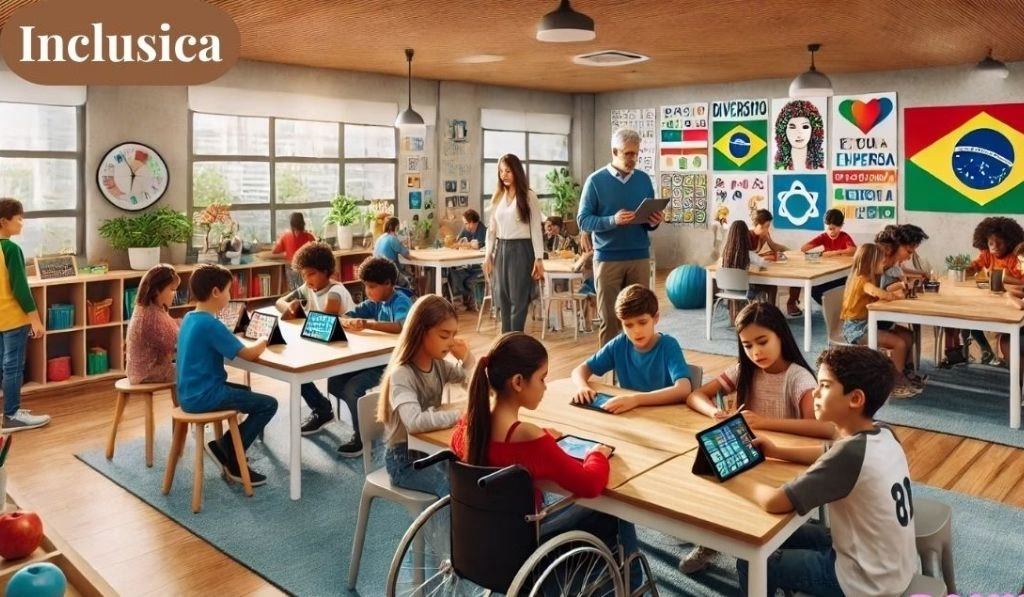
The key to the Inclusica movement is inclusive education. This philosophy of education acknowledges the fact that educational settings should be made so as to accommodate various student needs as opposed to students being expected to fit into rigid systems.
Schools that use inclusive practices establish classrooms in which learners who have different abilities, backgrounds, and learning styles can coexist successfully. Studies indicate that these settings are an advantage to every learner due to the development of empathy, comprehension, and group efforts.
Key Proficiencies of Effective Inclusive Education
There are numerous key elements that educational organizations require to be effective in the implementation of Inclusica. The teachers need advanced training so as to realize various learning needs and implement inclusive teaching methods.
The schools should allocate money to the right technology, materials, and support services. Designing the curriculum flexibly allows everyone to find content that is meaningful to them. Community participation forms support systems that go beyond the classroom.
The curriculum must be dynamic to all learning styles and capabilities. The latter flexibility will give all students equal access to the same educational opportunities at the same time and provide them with an individualized approach when necessary.
Digital Solutions and Technology Solutions
The current Inclusica applications provide better software tools that assist the organisations to create more accessible environments. The tools are useful in assisting developers and designers to develop websites, applications, and platforms that are in line with the international accessibility criteria such as WCAG and ADA.
The tools of digital accessibility detect obstacles and offer code-level remedies automatically. The technology means that the online spaces will be equal to all people and all the barriers to complete involvement are removed.
A lot of companies have become users of AI-powered analytics and unbiased language applications. These solutions assist HR departments to write job descriptions better, eliminate unconscious bias during the recruitment process, and demonstrate that hiring practices are fair across backgrounds.
Implementation Support and Training
The organizations have customized inclusion audits conducted to assess their present accessibility, recruitment process, and the means of communication. Such measures give clear improvement strategies.
Training programs contribute to the satisfaction of various needs of teachers and staff. Professional development will provide the educators with the resources and freedom to help students learn in different ways.
Measures and accountability instruments assist companies in gauging the progress of inclusive objectives. Periodic evaluation enables businesses to make adjustments and appear devoted to significant change.
Advantages of Inclusica to Education and Workplaces

Inclusive environment development provides major benefits in a variety of fields. Studies have always revealed that inclusive education enhances the performance of all students and not only the students with special needs.
Educational Benefits
Learners in integrated classrooms have better social skills and emotional intelligence. They are taught to value diversities and make quality friendships with diverse people.
When schools become inclusive, academic performance is likely to improve. The various opinions and experiences are beneficial in classroom discussions that result in very profound knowledge of the complicated issues.
The teachers mention that working in inclusive settings contributes to a higher level of job satisfaction. They acquire more adaptable instructional skills with students and families.
Workplace Advantages
Organisations that adopt the principles of Inclusica perform better than their competition in various measures. The presence of diverse teams contributes to innovation and creativity in problem-solving and decision-making since they have different views on the same issue.
Firms that have inclusive cultures record high levels of employee engagement and retention. Employees are made to feel appreciated and listened to, and this ensures that they contribute more towards the organization and also exhibit dedication to the organizational objectives.
Diversified workplaces also have improved customer loyalty and satisfaction. A diverse team that represents the needs of diverse communities produces products and services that are actually responsive to different needs.
International Attitudes to Inclusica
Various regions have come up with their ways of embracing inclusive practices. Brazil has emerged as a model in the area of educação inclusica, and there is a major transformation of the education system in favor of inclusive approaches.
Educators in Brazil have developed new approaches that incorporate traditional teaching with universal practice. This practice demonstrates impressive outcomes in enhancing results of every student at the same time as creating kinder communities.
These programs have been successful to the extent that they have led to the replication of similar programs across the globe. Latin American countries, European and Asian countries implement these principles to the specifics of their culture and education.
Introduction of Inclusica in Your Organization
Companies in their inclusica path ought to be free to start with a truthful self evaluation. This includes studying existing practices, working out the gaps, and knowing the areas where enhancements are necessary.
Getting Started
It is necessary that the leadership is committed. True well-wishers on the part of the top management show that values of inclusivity are important across the organization.
The measurement of progress involves data collection to provide the baseline. Before organizations change, they must know their present position.
Scheduling of resources can guarantee funding and human resources in inclusion efforts. Even the most appropriate strategies will also not work without appropriate investment.
Developing Non-discriminative Policies
The gaps that are identified should be dealt with in comprehensive plans. Diversity and inclusion policies produce conventional approaches to recruitment and organizational culture.
The resistance to change can be tackled through frequent communication on the benefits of inclusive practices. The introduction should be gradual to make time to adjust and learn.
Ongoing assistance is offered through support networks and mentorship programs. Such resources assist the employees in creating inclusive thinking and behaviors.
Read more: Beliktal: The Hidden Destination That Means More Than a Place
Overcoming Problems
The implementation of Inclusica principles by organizations is normally associated with hindrances. The established employees may be slow to embrace change.
This is practical because of short resources to train and improve infrastructure. Other organizations do not know how to quantify the returns on investment of inclusion.
Effective organizations overcome these obstacles by means of thorough communication and gradual implementation. They invest in training packages and develop success measures.
Real-Life Implementations and Case Studies
Inclusive excellence has made many companies become leaders. Such organizations show that business benefits are tangible when it comes to the benefits of Inclusica practices.
Corporate collaborations demonstrate the way corporations can redefine digital platforms and internal procedures. This results in an increased workforce and consumer touch.
Educational institutions use inclusive solutions in enhancing campus access. They are compliant and more helpful to the populations of students.
Government bodies strive to keep websites and other government services open to all people. This incorporates individuals who have visual, auditory, and cognitive impairments.
Future Trends of Inclusica

The trend is constantly changing as new trends in the movement are produced. Technology is becoming more significant, and AI and machine learning will contribute to bias detection and elimination.
Virtual and augmented reality opens new opportunities for inclusive education and training. Through these tools, the learners can gain exposure to other viewpoints and exercise inclusive behavior.
With intensifying awareness, Inclusica is exploring new areas and lines of operation. The ways of embracing inclusive practices are found by small businesses, non-profit organizations, and even by government agencies.
Frequently Asked Questions of Inclusica
What does Inclusica mean? Inclusica is a movement and a strategy that aims at making all things in life, including education, technology, and workplace conditions to be inclusive.
What is the effect of Inclusica in workplaces? It promotes creativity and teamwork through appreciation of diversity and developing fair conditions. More employee satisfaction and improved business performance is observed in inclusive workplaces.
So what is the significance of Inclusica to education? It guarantees equal opportunities to study and makes students ready to succeed in a variety of settings. Every learner gets exposed to various learning styles and perspectives.
Is Inclusica applicable to digital platforms? Yes, Inclusica is an organization that advocates technology accessibility, which means that the online space is accessible to all through tools that detect and remedy accessibility issues.
How is the difference between inclusion and integration? Inclusion is the possibility to form the environment in which all people engage in collaboration. Integration usually entails the inclusion of individuals within the already existing systems without transforming these systems to be made genuinely accommodative.
What are the ways to measure Inclusica success? By using employee satisfaction surveys, retention rates, diversity rates, customer feedback, and checking the accessibility compliance on all platforms.
What are the challenges that are predominant in the implementation of Inclusica? The major challenges encountered are resistance to change, inadequate resources, poor knowledge on inclusive practices, and inability to measure immediate return on investment.
Creating an Inclusive Society of Tomorrow
It takes a long journey, time, and learning to be able to reach really inclusive spaces. Inclusica offers the structures and the instruments that should be in place during this transformation.
Each individual can contribute to the establishment of an environment to celebrate diversity. Inclusive education in schools, corporate activities in businesses, and grassroot movements in neighborhoods, every single step will take us closer to equitable societies.
Victory is a matter of both personal and collective action. Everyone can help to create the world where everyone really belongs by knowing about the principles and applying all practices, as well as contributing to the development.
The future is on the ones that will accept the idea of Inclusica and will actively work to make a positive difference. Companies which invest in inclusive practices today set themselves to achieve success in the long-term and make a contribution to the development of society.