
 By Bella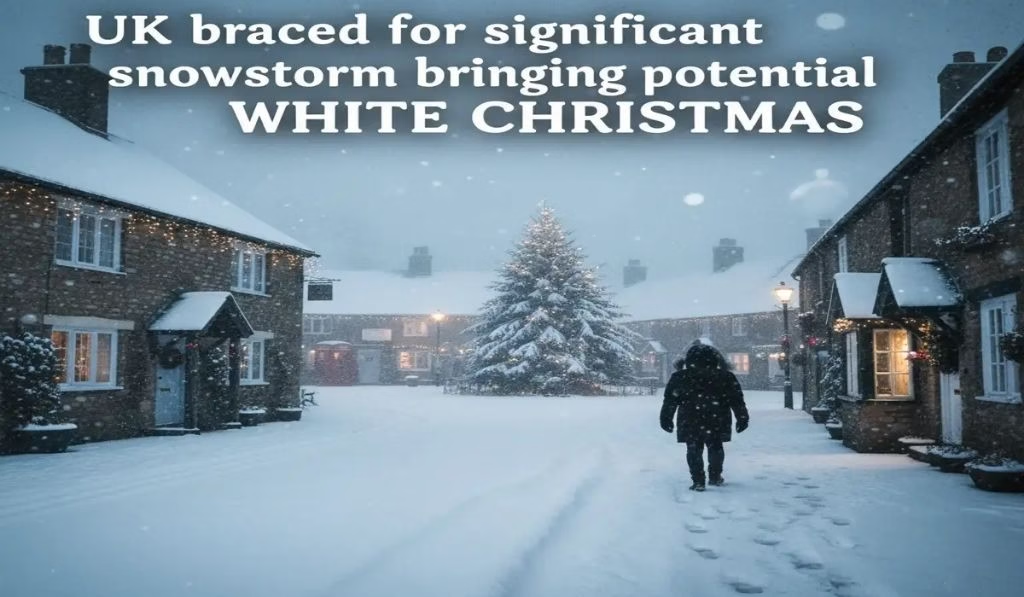
The UK is also set to receive a huge snowstorm with a potential white Christmas and this year, forecasters say that the chances are better than it has been in more than 10 years.
The Met Office has already given severe weather alerts on snow and ice in some areas of England and Wales, and it is expected that up to 30 to 40 centimetres of snow will befall certain areas of Northern England.
Travel disruption, energy demand spikes, everything you should know to stay safe, informed, and prepared this festive winter season.
What “UK Braced for Snowstorm” Means
When the meteorologists say that the UK is preparing for an important snowstorm, they imply that weather models are converging to form the conditions of widespread, potentially disruptive snowfall. It is not light dusting.
This is an incident which might have implications on travelling, power stations, and millions of families in Britain.
There have been different weather models and forecast maps circulating that indicate an air mass of Arctic weather may force large amounts of snow into the UK in the build-up to Christmas. There are even forecasts that the snow may continue to fall in parts of Scotland that are higher up, beginning towards the end of the 20th of December.
This is the type of winter event that the UK has not experienced in terms of scale since 2010.
What Is the Real Process of Making a UK Snowstorm?
Knowledge of science allows you to take the predictions into consideration. Snowstorms do not occur out of thin air, but require very specific atmospheric conditions.
The following are the drivers of a big snow event in the UK:
| Atmospheric Factor | What It Does |
| Blocking High Pressure | Dominates over Greenland/Scandinavia, refusing weak Atlantic air to the UK. |
| Polar Vortex Disruption | Enables spilling of Arctic air to a lower level than normal. |
| Jet Stream Shift | Curves southwards, blanketing Britain with polar bitterness. |
| Atlantic Moisture | Warm air (Atlantic) and cold air collide with each other and result in snow instead of rain. |
| La Niña Conditions | The conditions of the Polar Vortex behaviour and La Niña can lead to dynamic patterns that can lead to colder conditions in some areas of Europe. |
When all of these five factors come together, as they seem to be doing this winter, the outcome is just what the UK is gearing up for, that is, a major snowstorm.
Where Will the Most Affected Areas Be?
The UK does not have equal risks in all areas. Geography and elevation have a colossal impact on snowfall.
Scotland — Highest Risk
Scotland is likely to be the heart of the snowstorm, with forecasts predicting heavy snowfall in the Highlands, Grampians, and Central Belt. Strong winds might cause blizzard-like weather in open places, lowering visibility to a great extent and rendering travelling risky.
Northern England — Significant Accumulation Likely
Northern England, such as Cumbria, Northumberland, and Yorkshire, might also see a considerable amount of snow. The Pennines, otherwise known as the backbone of England, may experience a number of inches of deposition owing to their altitude.
Wales — Mixed Conditions
Wales is predicted to be under mixed conditions, with higher areas like Snowdonia receiving more snow whereas lower elevations will receive sleet or freezing rain.
South of England — Lower but Non-Zero Risk
The South East, London, and Bristol have the least chances of experiencing large accumulation. Nevertheless, even light snowfall in these highly populated regions can cause severe transport network interruption.
The Probability of a White Christmas
So this is what everybody seems to be asking. Here is the honest answer.
For the Met Office to declare a white Christmas, one single snowflake must be seen to fall on the 25th of December within 24 hours by an official Met Office observer or a Met Office automated weather station. During the period since 1960, there have been no fewer than 5% of years when network records have recorded snowfall on Christmas Day.
But the typical Dickensian scene, with snow on the ground all day long, is much rarer.
| Region | Chance of Snow on Dec 25 | Last Noteworthy White Christmas |
| Scottish Highlands | Very High (65–75%) | Regular in elevation |
| Northern England | Moderate–High (40–55%) | 2010 |
| Wales (highlands) | Moderate (35–45%) | 2010 |
| Midlands | Low–Moderate (20–30%) | 2010 |
| London / South East | Low (10–20%) | 2010 |
As the climate becomes warmer and weather patterns reveal the trends of climate change, a White Christmas in 2025 will be a luxury to the present and future generations.
What the Met Office Warning Colours Mean
The UK has a colour-coded alert system. Being conversant with the distinction might save your life.
The system is based on a colour-coded hierarchy that relays the extent and potential of weather effects. Yellow warnings signify that weather conditions can bring a certain disturbance.
Amber warnings indicate a high probability of effect on everyday routine and a potential threat to security. The highest category is red warnings, applied in the worst weather conditions when dangerous, even life-threatening conditions are expected.
Current Status (Winter 2025–26):
- 🟡 Yellow alerts — Operating over the greater part of Scotland and Northern England.
- 🟠 Amber alerts — Snow and ice issued in England and Wales.
- 🔴 Red alerts — Not in effect, but may happen in case of an intensified storm.
You must always visit the Met Office site or app on a daily basis when warnings are out.
Travel Disruption: What to Expect
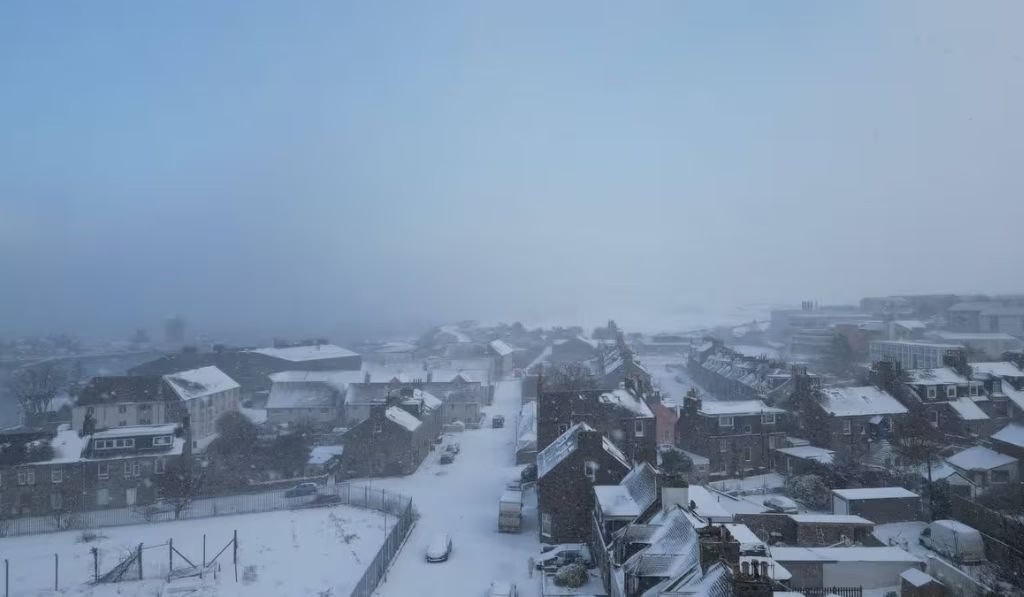
The UK infrastructure was not prepared in terms of snowstorms. Simply, the country is not constructed to accommodate snowstorms like Canada or Scandinavia. The history of past events and present prognoses inform us that:
Roads & Motorways
Slick roads and low visibility lead to accidents and shutdowns. The motorways and A-roads are given priority by the gritting teams. Lanes in rural areas may take up to 24 to 48 hours to be treated.
Rail Services
Delays and cancellations are a result of overhead line icing. Junction failures cause extreme slowing of services. Always make sure to check National Rail or the app of your operator before travelling.
Airports
The storm anticipated to arrive on Christmas Eve may bring up to 4cm of snow per hour in some areas of Scotland, creating severe runway clearance problems in Scotland and even in England. The most historical impact is felt at Heathrow, Edinburgh, and Manchester.
Recommendation: If you are travelling during Christmas, purchase flexible tickets, track forecasts after December 20, and leave some margin.
Impact on Homes, Energy & Bills
A freeze this drastic has actual effects on your house and pocketbook.
What Homeowners Should Pay Attention To:
Frozen pipes, so wrap pipes that are outside the house and leave the heating on low when you are not there. Boiler failures mean you should service it now, not when it breaks down.
Roof snow load means accumulated snow on flat roofs may create structural stress. Raised power charges come with cold snaps that drive heating expenses high.
Energy Grid Pressure: The National Grid normally switches on emergency actions in case of long cold spells. Winter 2024–2025 was above-average for the UK with an average temperature of 4.6 degrees Celsius, meaning infrastructure has not been stress-tested recently. It may be a different winter this year.
How to Prepare for a Winter Snowstorm
Wait no longer till the snow is falling. Get ready now with this easy checklist:
At Home:
- ✅ Have at least 3 to 5 days of water, medication, and food.
- ✅ Test your boiler and vent radiators.
- ✅ Foam lag exposed pipes.
- ✅ Have a torch, blankets, and a battery-powered radio at hand.
- ✅ Know how to switch off your water meter in case of a bursting pipe.
For Travel:
- ✅ Mount winter tyres or have snow chains if journeying in affected areas.
- ✅ Have an emergency kit in your vehicle, including a blanket, torch, shovel, and snacks.
- ✅ Check Met Office alerts and road conditions prior to any trip.
- ✅ Allow much more travelling time than normal.
For Vulnerable People:
- ✅ Visit elderly or disabled neighbours.
- ✅ Sign up to the Priority Services Register with your energy supplier to receive additional assistance.
- ✅ Visit your GP surgery early if a medication refill is necessary.
Snowstorms and Climate Change — An Emerging Paradox
This is the first thing that surprises the majority of people: the rise of temperatures does not necessarily imply reduced snow. Indeed, it may represent more terrible snowstorms.
According to scientists, problems with the working of jet streams and polar vortex systems may enable Arctic air to move further south than it normally does, resulting in heavy snow in areas where it has rarely been before.
It is a paradox that warming temperatures lead to severe winter events, and the sophistication of climate systems points to the need for better forecasts and readiness.
This is the reason why events like the recent snowstorm prognosis are important. This could reduce the number of snow days in the UK in the long run, but when the snow falls, it will be greater and more disruptive than anything we have seen before.
Read more: Florian Haertel: German Journalist, Alex Kingston’s Ex-Husband & Father of Salome
Economic Effect of a UK Mega Snowstorm
A heavy snowstorm does not only inconvenience people, it is costly. A lot of it.
Industries Most Affected:
| Sector | Impact |
| Retail | Missing footfall on the busiest week of Christmas shopping. |
| Airlines | Cancellations, compensation claims, cost of rebooking. |
| Insurance | Rush on claims of vehicle damage, broken pipes, cancelled travel. |
| Construction | Strikes on construction works. |
| Tourism | City-break venues in losses, Scottish ski resorts in profit. |
On the upside, retailers of winter clothes, sleds, and warming devices experience demand spikes. In snowy areas, hotels and cabins see better bookings.
Concluding Reflections
Having monitored the UK winter weather patterns over the years, the fact that the signals align, that is, the polar vortex behaviour, La Niña influence, and blocking high pressure all facing the same direction at the same time, is remarkable.
The last time the conditions worked so perfectly was in winter 2010, which brought the most widespread white Christmas the UK had in decades.
Several individuals were surprised by that winter. This time we have early warning, we have improved forecasting mechanisms, and more importantly we have time to prepare.
Whether you want the snow to fall on Christmas morning or simply wish to make it safely to your family’s front door, the message is the same: listen to the forecasts, plan early, and be flexible. Nature is not on a timetable, and a few degrees of difference in temperature will make a white Christmas a rainy one, or a slight dusting a full snow blizzard.
Frequently Asked Questions
What does it mean when the UK is braced for a serious snowstorm?
It implies that weather forecasters and the Met Office have recognized weather conditions, such as cold Arctic air, jet streams, and Atlantic moisture, that are most likely to intersect and result in heavy snowfall in various areas of the UK.
What is the possibility of a white Christmas in the UK in 2025?
Probability is greater than usual this year. In the North, such as Scotland and Northern England, there is a 40 to 75 percent probability of snow on December 25. The probability is 10 to 20% in the south, such as London, which is less but not zero.
When did the UK last experience a widespread white Christmas?
The last decent, nationwide white Christmas occurred in 2010, so the prediction this year is of great importance.
What regions of the UK are most vulnerable to the snowstorm?
The regions with the greatest risk of heavy accumulation and travel disruption are Scotland, particularly the Highlands, Northern England, including Cumbria, Northumberland, and the Pennines, and upland areas of Wales.
What do I need to do to prepare my home for a UK snowstorm?
Insulate outside pipes, service your boiler, have 3 to 5 days of essential supplies on hand, and know how to turn off your water supply in case of a burst pipe. Apply to the Priority Services Register of your energy supplier if you are vulnerable.
Will climate change increase or decrease the occurrence of UK snowstorms?
It is complex. As much as warming decreases the general snow frequency, it interferes with the polar vortex and jet stream, which may actually move severe Arctic air further south, resulting in intense yet infrequent snowstorms.
What are Met Office amber warnings and why should I care?
Amber warnings imply that there is a high risk of disruption to normal life and potential safety threats. When an amber warning is issued for your area, you should adjust travel arrangements, monitor road conditions, and ensure preparedness at home.